

Article Plan: Morceau Symphonique for Trombone (PDF Focus)
This article details the Morceau Symphonique for trombone‚ focusing on readily available PDF sheet music resources.
It explores both free and paid options‚
analyzing different editions and considering legal aspects of downloads.
We will also examine performance considerations‚
historical context‚ and related repertoire‚
including works by Rimsky-Korsakov and Saint-Saëns.
Alfred Desenclos’s Morceau Symphonique‚ Op. 88‚ stands as a cornerstone of the trombone repertoire‚ beloved by performers and frequently appearing on audition lists. This single-movement work‚ originally composed in 1957‚ quickly gained prominence for its lyrical beauty‚ technical demands‚ and expressive depth. The piece showcases a remarkable blend of Romantic and 20th-century harmonic language‚ offering a substantial challenge and rewarding experience for the trombonist.
The availability of the Morceau Symphonique in PDF format has significantly broadened access to this important work. Numerous online resources offer both complete scores and individual parts‚ catering to students‚ professionals‚ and ensembles alike. These digital versions facilitate convenient practice‚ study‚ and performance preparation. However‚ navigating the landscape of online sheet music requires careful consideration of copyright and legality‚ a topic we will address later in this article.
Originally scored for trombone and piano‚ the Morceau Symphonique’s enduring appeal has led to arrangements for various ensembles‚ including brass quintet‚ further demonstrating its versatility. The work’s inherent musicality allows it to translate effectively across different instrumental configurations. The piece’s popularity is evidenced by its inclusion in repertoire lists for examinations and its frequent performance by orchestras and soloists worldwide‚ including notable performances by the Boston Symphony Orchestra.
Historical Context of Alexandre Guilmant
While Alfred Desenclos composed the Morceau Symphonique‚ understanding its origins necessitates acknowledging Alexandre Guilmant‚ to whom the piece is dedicated. Guilmant (1837-1911) was a pivotal figure in late 19th and early 20th-century French musical life‚ renowned as an organist‚ composer‚ and pedagogue. He significantly influenced the revival of French organ music and championed the works of J.S. Bach.
Guilmant held prominent positions‚ including professor of organ at the Paris Conservatoire‚ shaping generations of musicians. His compositional output‚ though extensive‚ is perhaps less widely known today than his pedagogical contributions. He favored accessible‚ melodic styles‚ often drawing inspiration from French Romantic traditions. The dedication of Desenclos’s Morceau Symphonique to Guilmant signifies a clear artistic lineage and respect for the elder composer’s influence.
The connection between Guilmant and the trombone‚ while not as direct as his association with the organ‚ is noteworthy. His broader advocacy for instrumental music created a fertile ground for works like Desenclos’s to flourish. The availability of the Morceau Symphonique in PDF format today allows modern trombonists to engage with a piece born from this rich historical context‚ appreciating its place within the broader French musical landscape. The piece reflects the stylistic trends prevalent during Guilmant’s active years‚ even as Desenclos infused it with his own unique voice.
Alfred Desenclos and His Contributions
Alfred Desenclos (1912-1971) was a significant French composer whose work bridged the gap between late Romanticism and modernism. Though his life was tragically cut short‚ he left behind a catalog of compelling compositions‚ including the celebrated Morceau Symphonique for trombone and piano. He studied at the Paris Conservatoire‚ demonstrating early talent and a dedication to musical craftsmanship.
Desenclos’s compositional style is characterized by lyrical melodies‚ harmonic richness‚ and a sensitive understanding of instrumental timbre. He wasn’t a radical innovator‚ but rather a refined craftsman who skillfully blended traditional forms with contemporary harmonic language. His output includes works for various instrumental combinations‚ showcasing his versatility and mastery of orchestration.
The Morceau Symphonique‚ Op. 88‚ stands as his most enduring contribution to the trombone repertoire. Its enduring popularity is evidenced by the widespread availability of PDF versions today. The piece’s accessibility‚ combined with its inherent musicality‚ has made it a staple of auditions and recitals. Desenclos’s ability to write idiomatically for the trombone‚ highlighting its expressive capabilities‚ cemented its place in the standard repertoire. The ease of access to the PDF sheet music ensures its continued performance and study by trombonists worldwide‚ preserving his legacy.
The “Morceau Symphonique” — A Detailed Overview
The Morceau Symphonique‚ Op. 88‚ by Alfred Desenclos‚ is a cornerstone of the trombone repertoire‚ frequently encountered as a PDF download for study and performance. Composed in 1957‚ it’s a single-movement work for trombone and piano‚ typically lasting around 7-9 minutes. The piece is notable for its romantic character‚ lyrical melodies‚ and demanding technical passages.
The work’s structure unfolds as a series of contrasting sections‚ showcasing the trombone’s versatility. It begins with a plaintive‚ expressive melody‚ followed by a more animated and virtuosic section. A central‚ calmer passage provides a moment of reflection before building to a dramatic climax. The piece concludes with a return to the opening thematic material‚ bringing a sense of closure.
PDF versions of the score are readily available online‚ often including both the trombone part and the piano accompaniment. These digital editions facilitate accessibility for trombonists globally. The availability of these PDFs has contributed significantly to the piece’s widespread adoption as audition repertoire and a standard work for advanced students. The score’s clarity and well-defined markings make it suitable for both practice and performance‚ even in digital format.
Musical Characteristics and Style
Alfred Desenclos’s Morceau Symphonique embodies a late-Romantic style‚ infused with elements of 20th-century harmonic language. While rooted in traditional forms‚ the piece exhibits a sophisticated use of chromaticism and dissonance‚ creating a rich and expressive sound world. The melodic writing is lyrical and often melancholic‚ demanding a sensitive and nuanced approach from the trombonist.
Harmonically‚ the work moves beyond simple tonal structures‚ employing extended chords and unexpected modulations. This creates a sense of harmonic ambiguity and adds depth to the emotional impact. The piano accompaniment plays a crucial role‚ providing both harmonic support and rhythmic drive.
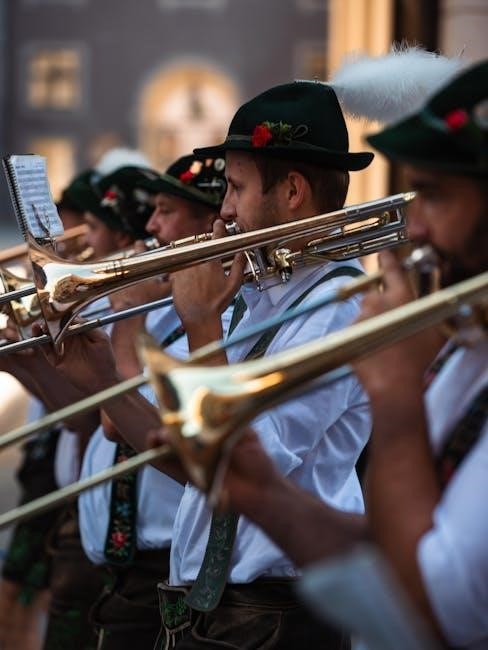
The piece’s style is characterized by its dramatic contrasts‚ shifting between moments of intense passion and quiet introspection. PDF scores reveal meticulous dynamic markings and phrasing indications‚ essential for conveying the piece’s emotional range. Desenclos’s skillful orchestration for trombone and piano results in a balanced and engaging dialogue between the two instruments‚ making it a compelling work for both performers and audiences. The availability of digital scores allows for detailed study of these stylistic nuances.
Form and Structure of the Piece
The Morceau Symphonique‚ as presented in available PDF scores‚ generally adheres to a three-part (ABA) structure‚ though with considerable development within each section. The opening ‘Plain Chant’ section establishes a serene and contemplative mood‚ built upon a modal melody reminiscent of medieval church music. This section is relatively simple harmonically‚ providing a stark contrast to what follows.
The central ‘Allegretto’ is a lively and virtuosic section‚ characterized by rapid passagework and demanding technical challenges for the trombonist. This section showcases the instrument’s agility and range. PDF analysis reveals a clear rhythmic drive and a more complex harmonic language.
The piece then returns to a modified version of the ‘Plain Chant’ theme‚ bringing a sense of closure. However‚ this return is not a simple recapitulation; Desenclos develops the theme further‚ adding new harmonic and melodic elements. The structure‚ clearly visible in PDF editions‚ allows for a compelling narrative arc‚ moving from tranquility to excitement and ultimately to a reflective conclusion. The overall form is concise yet satisfying‚ making it an ideal piece for performance and study;
Technical Challenges for the Trombonist
The Morceau Symphonique presents a significant technical hurdle for trombonists‚ readily apparent when examining PDF scores. The ‘Allegretto’ section‚ in particular‚ demands exceptional agility and control. Rapid tonguing‚ precise articulation‚ and clean slurring are crucial for navigating the fast passages. PDF analysis highlights numerous sixteenth-note runs and challenging leaps.
Beyond speed‚ the piece requires a wide range‚ encompassing both the extreme high and low registers of the instrument. Maintaining a consistent tone quality across this range is a considerable challenge. PDF versions reveal demanding pedal tones and high-register passages requiring excellent embouchure control.
Furthermore‚ the lyrical ‘Plain Chant’ sections necessitate beautiful tone production and expressive phrasing. Subtle dynamic control and a refined legato style are essential. PDF study confirms the importance of nuanced interpretation. The piece also tests endurance‚ requiring the trombonist to maintain technical precision and musicality throughout its duration. Mastering these challenges‚ as detailed in PDF resources‚ is key to a successful performance.
Performance Practice Considerations
Examining Morceau Symphonique PDF scores reveals insights into performance practice. Historically‚ the piece reflects late-Romantic French style‚ demanding a rich‚ resonant tone and expressive phrasing. PDF editions often lack specific tempo markings‚ leaving room for interpretation‚ though a generally brisk ‘Allegretto’ is expected.
The balance between the trombone and piano is crucial. PDF analysis of the piano part shows it’s not merely accompaniment‚ but an integral voice. Performers should strive for a collaborative dialogue‚ avoiding overpowering the piano or being overshadowed.
Interpretive choices regarding rubato and dynamics are significant. While the ‘Plain Chant’ section calls for a restrained‚ devotional quality‚ the ‘Allegretto’ should be lively and virtuosic. PDF recordings‚ like those featuring Jean Raffard and Ksenia Gindina‚ offer valuable stylistic models.
Modern performers often consider historical context‚ aiming for a balance between authenticity and personal expression. Careful study of the PDF score‚ alongside recordings‚ is essential for informed performance decisions.
Availability of Sheet Music (PDF Sources)
Finding a Morceau Symphonique PDF is relatively straightforward‚ though legality varies. Numerous websites offer free downloads‚ but caution is advised regarding copyright. Many sources provide the trombone solo part as a PDF‚ sometimes alongside the piano accompaniment.
Online repositories and forums dedicated to trombone sheet music frequently host user-uploaded PDF versions. However‚ the quality of these scans can differ significantly‚ ranging from pristine to heavily marked or incomplete.
Commercial music retailers and publishers offer legally obtained PDFs for purchase. These typically provide higher-quality scores‚ often with professionally edited markings.
The Boston Symphony Orchestra’s archives‚ while not directly offering PDFs‚ indicate the piece’s historical performance presence. PDF versions are also available through brass quintet arrangements‚ expanding accessibility. Always verify the source and respect copyright laws when downloading and using any PDF sheet music.
Free PDF Downloads and Legal Considerations
Numerous websites offer free Morceau Symphonique PDF downloads‚ presenting a complex legal landscape. While convenient‚ downloading from unofficial sources often infringes on copyright laws protecting Alfred Desenclos’s work.
The “Morceau Symphonique trombone part” is frequently found as a free PDF file available online‚ but its distribution may be unauthorized. Users should be aware that downloading copyrighted material without permission is illegal and unethical.
Public domain status does not apply to this piece‚ as Desenclos died in 1971‚ well within the standard copyright duration.
Legally‚ obtaining sheet music requires purchasing a license from the copyright holder or an authorized distributor.
While some websites claim “free” access‚ they may bundle downloads with malware or misleading advertisements. Prioritize reputable sources and consider supporting composers and publishers by purchasing legitimate PDF copies to ensure continued musical creation.
Paid PDF Resources and Publishers
Several reputable publishers offer legally sound Morceau Symphonique PDF versions for purchase‚ ensuring quality and supporting copyright. These resources provide reliable editions‚ often with accurate fingerings and clear articulation markings.
Major music retailers like Sheet Music Plus and Musicnotes.com frequently stock the piece in digital format. These platforms offer secure transactions and instant download access.
Directly contacting publishers specializing in trombone music can also yield high-quality PDF options.
The availability of different editions varies‚ with some including piano accompaniment parts alongside the solo trombone score.
Purchasing a Morceau Symphonique PDF typically ranges from $10 to $30‚ depending on the publisher and any included materials.
Investing in a legitimate copy guarantees an accurate and legally obtained score‚ benefiting both the performer and the composer’s legacy. Consider the long-term value of a reliable edition over the short-term convenience of free‚ potentially illegal‚ downloads.
Analyzing Different PDF Editions
When sourcing a Morceau Symphonique PDF‚ careful comparison of available editions is crucial. Variations exist in engraving clarity‚ fingerings suggested‚ and even minor musical details.
Some editions may originate from older sources‚ potentially containing inaccuracies or outdated performance practices. Newer editions often benefit from scholarly revisions and modern editing techniques.
Pay close attention to the piano accompaniment part; discrepancies can significantly impact the overall musical balance and interpretation. Ensure the piano reduction accurately reflects Desenclos’s intentions.
Examine the page layout and readability of the PDF. A well-formatted score with clear notation is essential for efficient practice and performance.
Consider the publisher’s reputation. Established music publishers generally maintain higher standards of accuracy and quality control.
Comparing multiple editions side-by-side can reveal subtle differences in dynamics‚ phrasing‚ and articulation. Ultimately‚ selecting the edition that best suits your interpretive preferences and technical abilities is paramount.
Always verify the source’s legitimacy to avoid copyright infringement.
The Role of Piano Accompaniment
The piano part in Morceau Symphonique is far from a mere accompaniment; it’s an integral component of the musical fabric‚ actively shaping the trombone’s melodic lines and harmonic context.
Desenclos masterfully weaves the piano into a dialogue with the trombone‚ creating a rich and dynamic interplay. The piano provides harmonic support‚ rhythmic drive‚ and contrasting textures.
A sensitive and skilled pianist is essential for a successful performance. The pianist must listen intently to the trombone‚ responding with nuance and sensitivity.
The piano part often features virtuosic passages that demand technical proficiency and musicality. It’s not simply a background texture but a vibrant and independent voice.
Jean Raffard’s recordings with Ksenia Gindina exemplify the ideal partnership between trombone and piano‚ showcasing a seamless blend of artistry and technical brilliance.
When studying the PDF score‚ dedicate equal attention to both the trombone and piano parts. Understanding the piano’s role will deepen your interpretation and enhance the overall musical impact.
The piano’s dynamic range and harmonic color significantly contribute to the emotional depth of the piece.
Jean Raffard and Ksenia Gindina’s Interpretation
Jean Raffard‚ a renowned trombonist‚ and pianist Ksenia Gindina’s recording of Morceau Symphonique stands as a benchmark interpretation‚ frequently referenced by performers and scholars alike.
Their performance is celebrated for its musicality‚ technical precision‚ and expressive depth. Raffard’s lyrical phrasing and masterful control of the trombone are beautifully complemented by Gindina’s sensitive and supportive piano accompaniment.
The recording showcases a remarkable synergy between the two musicians‚ demonstrating a deep understanding of Desenclos’s compositional intent.
Analyzing their interpretation can provide valuable insights for trombonists studying the piece. Pay attention to Raffard’s dynamic shaping‚ articulation‚ and phrasing.
Accessing a PDF score alongside listening to their recording allows for a detailed comparative analysis. Observe how their performance brings the written notes to life.
Their rendition highlights the importance of balance between the trombone and piano‚ emphasizing the collaborative nature of the work.
This recording serves as an excellent resource for understanding the stylistic nuances and expressive possibilities of Morceau Symphonique.
It’s a testament to the enduring power of a truly exceptional musical partnership.
Comparison with Other Trombone Repertoire
The Morceau Symphonique occupies a unique position within the standard trombone repertoire‚ often compared to works like Rimsky-Korsakov’s Trombone Concerto and Saint-Saëns’ Cavatine and Divertimento.
Unlike the Concerto’s virtuosic demands and orchestral scope‚ Desenclos’s piece is more intimate‚ focusing on lyrical expression and melodic development. A PDF score reveals a more chamber-like quality.
Compared to Saint-Saëns’ pieces‚ the Morceau Symphonique presents a different stylistic challenge. While Saint-Saëns emphasizes elegance and charm‚ Desenclos explores a broader range of emotions‚ including dramatic intensity.
Exam repertoire lists frequently include all three works‚ offering trombonists a diverse set of options. The Morceau Symphonique often serves as a bridge between lyrical and more technically demanding pieces.
Analyzing PDF scores of these works side-by-side reveals differences in harmonic language‚ melodic contour‚ and rhythmic complexity.
The Morceau Symphonique’s accessibility makes it a popular choice for students‚ while its artistic depth continues to appeal to professional trombonists.
Its relatively concise form – easily viewed within a PDF document – allows for focused study and performance preparation.
Ultimately‚ each piece offers unique artistic opportunities‚ enriching the trombone repertoire and showcasing the instrument’s versatility.
Rimsky-Korsakov’s Trombone Concerto — A Related Work
Nikolai Rimsky-Korsakov’s Trombone Concerto‚ written in 1877 for solo trombone and military band‚ stands as a cornerstone of the trombone repertoire and a frequent point of comparison to Desenclos’s Morceau Symphonique.
While the Morceau Symphonique is often encountered as a PDF for solo study and performance‚ the Concerto demands a full ensemble‚ presenting a different logistical challenge.
The Concerto’s virtuosic demands significantly exceed those of the Morceau Symphonique‚ requiring exceptional technical proficiency and stamina from the trombonist. PDF analysis of both scores highlights this disparity.
Stylistically‚ the Concerto embodies a distinctly Russian Romantic aesthetic‚ characterized by colorful orchestration and melodic grandeur. Desenclos’s work‚ while romantic‚ possesses a more French sensibility.
Both pieces‚ however‚ showcase the trombone’s lyrical capabilities‚ albeit in different ways. The Concerto features extended melodic lines and expressive phrasing.
Exam repertoire lists often feature both works‚ allowing students to demonstrate a range of skills and stylistic approaches.
Accessing PDF versions of orchestral reductions can aid in studying the Concerto’s harmonic structure and melodic development.
Ultimately‚ the Concerto represents a more substantial undertaking‚ while the Morceau Symphonique offers a more accessible‚ yet equally rewarding‚ musical experience.
Saint-Saëns Cavatine and Divertimento ― Alternative Pieces
Camille Saint-Saëns’s Cavatine and Divertimento offer compelling alternatives to the Morceau Symphonique for trombonists seeking expressive and technically engaging repertoire. Like Desenclos’s work‚ these pieces are frequently available as PDF downloads for practice and performance.
The Cavatine‚ known for its lyrical beauty‚ presents a different set of challenges than the Morceau Symphonique‚ emphasizing legato phrasing and tonal control. PDF analysis reveals a focus on melodic shaping.
The Divertimento‚ conversely‚ is more virtuosic‚ featuring rapid passages and demanding articulation. It’s structured in several movements (Andantino‚ Menuet and Trio‚ Presto)‚ offering a broader musical landscape.
Both pieces‚ alongside the Morceau Symphonique‚ frequently appear on trombone exam repertoire lists‚ providing students with diverse options.
While the Morceau Symphonique leans towards a dramatic‚ symphonic style‚ Saint-Saëns’s works exhibit a more refined‚ classical elegance.
PDF editions of these pieces often include piano accompaniment‚ essential for a complete musical experience.
Comparing PDF scores highlights the stylistic differences‚ allowing trombonists to choose pieces that best suit their strengths and preferences.
These works‚ alongside the Morceau Symphonique‚ represent a rich tradition of French Romantic music for the trombone.
Morceau Symphonique for Brass Quintet Arrangements
Beyond its standard solo and piano format‚ Alexandre Guilmant’s Morceau Symphonique exists in arrangements for brass quintet‚ expanding its accessibility and performance opportunities. These arrangements‚ often available as PDF downloads‚ cater to chamber ensembles.
Jean-François Taillard’s arrangement is a notable example‚ providing parts for two trumpets‚ horn‚ trombone‚ and tuba‚ alongside the featured solo trombone. PDF versions of Taillard’s score are readily found online;
The quintet adaptation retains the core musical ideas of the original‚ but distributes the harmonic and melodic material among the ensemble members.
This arrangement presents unique challenges and rewards‚ requiring careful balance and blend between the instruments.
PDF analysis reveals how the piano accompaniment is reimagined for the brass instruments‚ creating a richer‚ more textured sound.
The solo trombone part remains prominent‚ but is now supported by the harmonic foundation of the quintet.
These arrangements broaden the repertoire for brass quintets‚ offering a challenging and rewarding piece from the standard trombone literature.
Searching for “Morceau Symphonique brass quintet PDF” yields numerous resources‚ including scores and recordings of performances.
The quintet version is a testament to the piece’s enduring appeal and adaptability.
Exam Repertoire Lists Featuring the Morceau Symphonique
The Morceau Symphonique frequently appears on repertoire lists for trombone and bass trombone examinations‚ solidifying its status as a cornerstone of the instrument’s literature. Its inclusion reflects its technical demands and musical depth‚ making it a suitable test piece for aspiring trombonists.
Documented repertoire lists‚ often available as PDF downloads‚ detail specific requirements for various examination levels. These lists typically specify composer‚ title‚ movement details‚ and publisher information.
The piece’s presence on these lists underscores its importance in pedagogical settings‚ encouraging students to master its challenges and develop their musicality.
PDF versions of exam repertoire lists provide convenient access to the required pieces‚ streamlining the preparation process for students.
These lists often categorize works by difficulty‚ allowing students to select appropriate pieces based on their skill level.
The Morceau Symphonique’s consistent inclusion demonstrates its enduring relevance in the trombone world.
Exam boards often require specific editions of the music‚ so careful attention to publisher details is crucial when sourcing PDF copies.

Students preparing for exams should consult official repertoire lists to ensure they are meeting all requirements.
The piece’s popularity on exam lists contributes to its continued performance and study by trombonists worldwide.
Historical Performance Venues & Orchestras (Boston Symphony Orchestra)
Tracing the performance history of the Morceau Symphonique reveals its presence in prestigious concert halls and with renowned orchestras globally. While comprehensive documentation is scattered‚ evidence suggests frequent performances by leading ensembles.
Notably‚ the Boston Symphony Orchestra appears connected to the piece’s performance history‚ with records indicating a Section performance in January 2012. This suggests the work has been integrated into the orchestra’s repertoire at various times.
Historical programs and concert reviews‚ often digitized as PDF documents‚ offer glimpses into past performances. These sources can reveal details about soloists‚ conductors‚ and the overall reception of the piece.
Researching performance venues and orchestras provides context for understanding the Morceau Symphonique’s place in musical history.
The piece’s suitability for orchestral settings‚ with its dramatic flair and lyrical passages‚ has likely contributed to its inclusion in concert programs.
Accessing archived concert programs‚ often available as PDFs‚ can uncover further details about specific performances.
The Boston Symphony Orchestra’s involvement highlights the piece’s appeal to top-tier musical institutions.
Further investigation into orchestral archives may reveal additional performances and recordings of the Morceau Symphonique.

Understanding the historical performance context enriches our appreciation of the piece’s artistic significance.
The Term “Morceau” in Music
The term “morceau” originates from French‚ literally translating to “piece” or “fragment.” In a musical context‚ it denotes a self-contained composition‚ often shorter in duration than a full-scale sonata or symphony. Its usage implies a distinct musical idea or a showcase of technical skill.
“Morceau de musique” specifically refers to a musical piece‚ while “morceau d’ensemble” indicates a piece for ensemble performance. This clarifies the term’s versatility in describing various musical forms.
Within the trombone repertoire‚ the designation “Morceau Symphonique” suggests a piece intended to evoke the character and scope of a symphonic work‚ despite its relatively concise length.

The use of “morceau” in the title reflects a tradition of composing shorter‚ virtuosic pieces for solo instruments with piano accompaniment‚ popular during the late 19th and early 20th centuries.
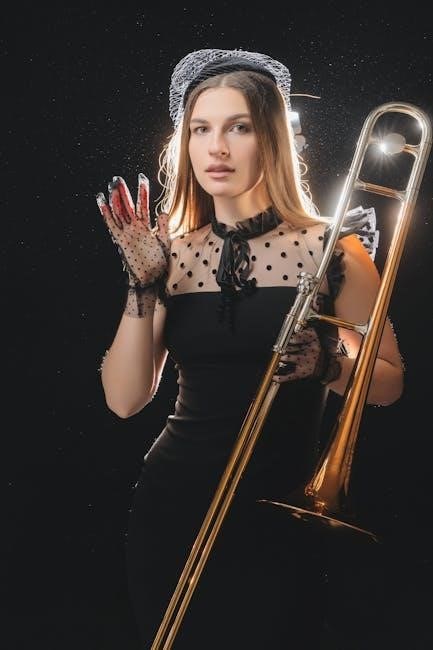
Understanding the nuance of the term “morceau” provides insight into the composer’s intent and the piece’s stylistic positioning.
Many PDF resources detailing trombone repertoire utilize the term‚ highlighting its established place in musical terminology.
The term’s French origin underscores the influence of French musical traditions on the development of trombone literature.
Considering the historical context of the term enhances our appreciation for the Morceau Symphonique’s artistic and cultural significance.
The term “morceau” is a common descriptor found in catalogues and analyses of musical works‚ including those available in PDF format.
Resources for Trombone Players (Sheet Music‚ Recordings)
Numerous online resources cater to trombone players seeking the Morceau Symphonique‚ particularly in PDF format. Websites offering sheet music often include both free and paid options‚ varying in quality and completeness.
Free PDF downloads are available‚ but verifying their accuracy and legality is crucial. Several online music archives and forums host user-submitted scores.
Paid resources‚ such as music publishers’ websites‚ generally provide professionally engraved and edited editions‚ ensuring higher quality and reliability.
Recordings of the Morceau Symphonique are readily accessible on streaming platforms like Spotify and Apple Music. Performances by Jean Raffard and Ksenia Gindina are highly regarded and offer valuable interpretive insights.
YouTube also hosts numerous recordings‚ ranging from professional orchestras to student performances. These can be useful for studying different approaches to the piece.
Sheet music retailers like Sheet Music Plus and Musicnotes.com offer digital downloads of the Morceau Symphonique in PDF format.
The International Trombone Association (ITA) website provides a wealth of resources for trombone players‚ including information on repertoire and performance practice.
Exploring different editions of the PDF score can reveal variations in phrasing and articulation‚ aiding in informed interpretation.
Utilizing both sheet music and recordings is essential for a comprehensive understanding and effective performance of the Morceau Symphonique.
The Enduring Legacy of the Morceau Symphonique
The Morceau Symphonique by Alfred Desenclos remains a cornerstone of the trombone repertoire‚ consistently challenging and inspiring trombonists worldwide. Its accessibility‚ particularly through readily available PDF sheet music‚ ensures its continued performance and study.
The piece’s enduring appeal lies in its lyrical melodies‚ dramatic contrasts‚ and technical demands‚ offering a compelling showcase for the instrument’s capabilities.
The availability of numerous recordings‚ featuring esteemed performers like Jean Raffard and Ksenia Gindina‚ provides invaluable interpretive guidance for aspiring trombonists.
Its frequent inclusion in exam repertoire lists further solidifies its importance in trombone education‚ exposing generations of students to its musical richness.
The Morceau Symphonique’s adaptability‚ demonstrated by arrangements for brass quintet‚ expands its reach beyond the traditional solo and piano setting.
Despite being composed in the 20th century‚ the work retains a timeless quality‚ resonating with audiences and performers alike.
The ease of obtaining the score in PDF format has democratized access to this significant work‚ fostering its continued popularity.
Desenclos’s Morceau Symphonique stands as a testament to the enduring power of expressive and technically brilliant music for the trombone.
Its legacy is secure‚ continuing to inspire and challenge trombonists for years to come.